by Brenna Roblin
The newly processed Indigenous Language Collection (2016-0015) at the Archive of the Jesuits in Canada reflects the persistent Jesuit interest in language. This post focuses on one series of the collection, dedicated to etymological research.
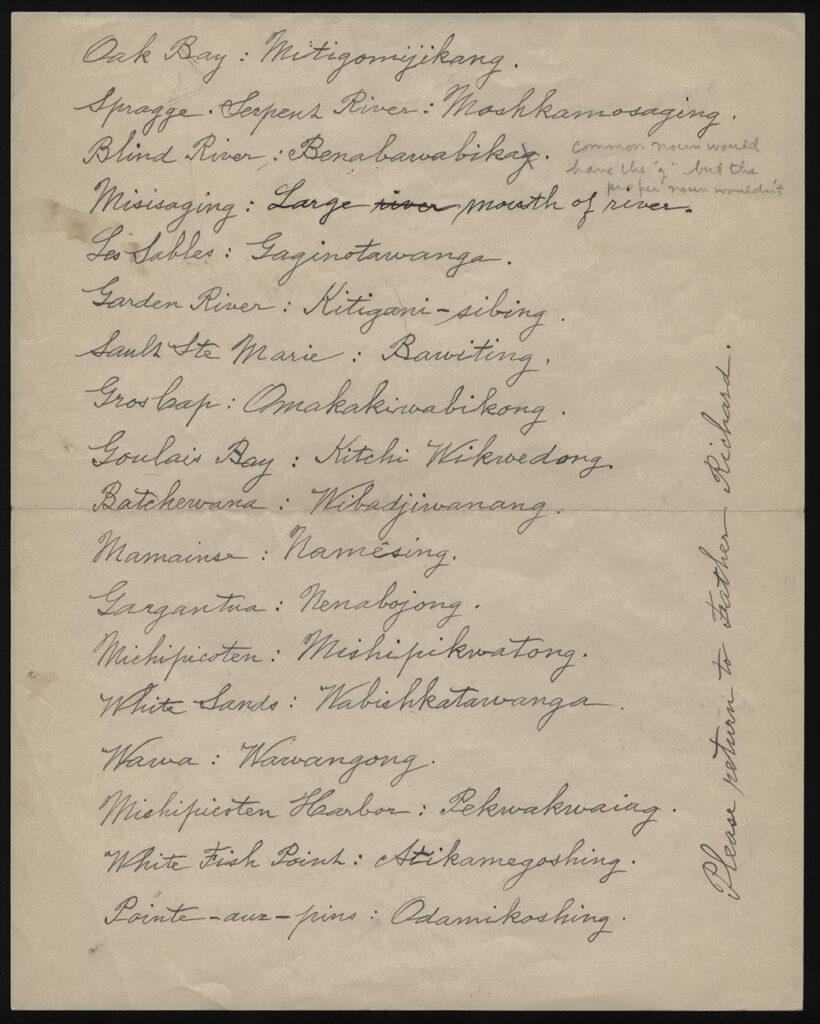
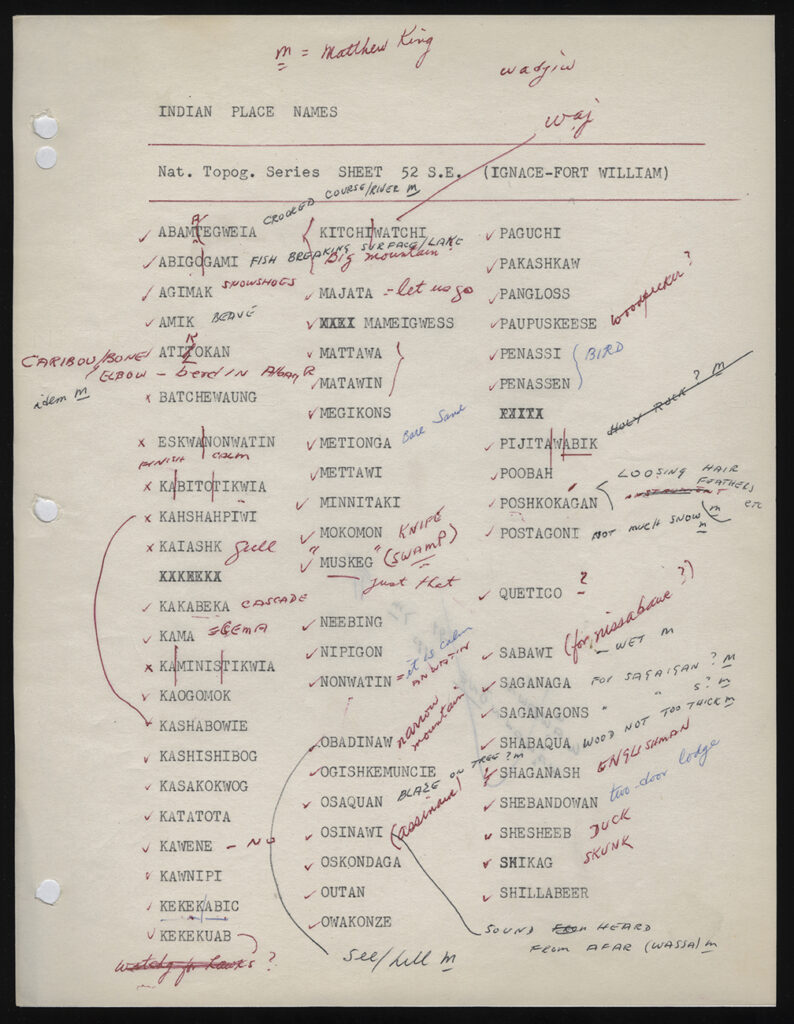
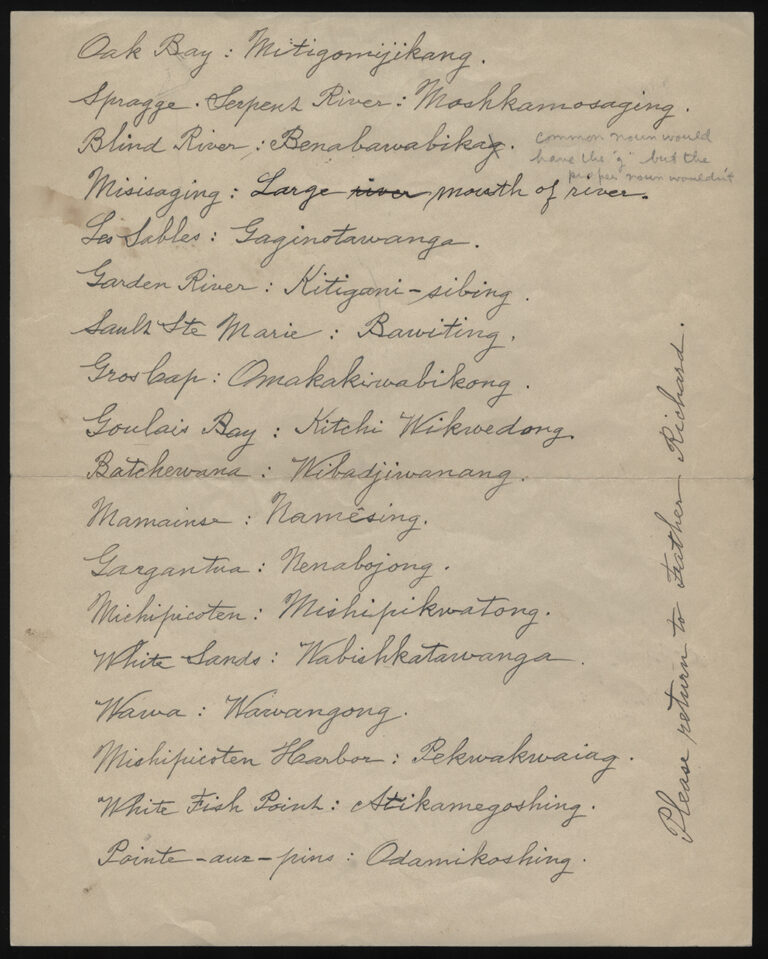
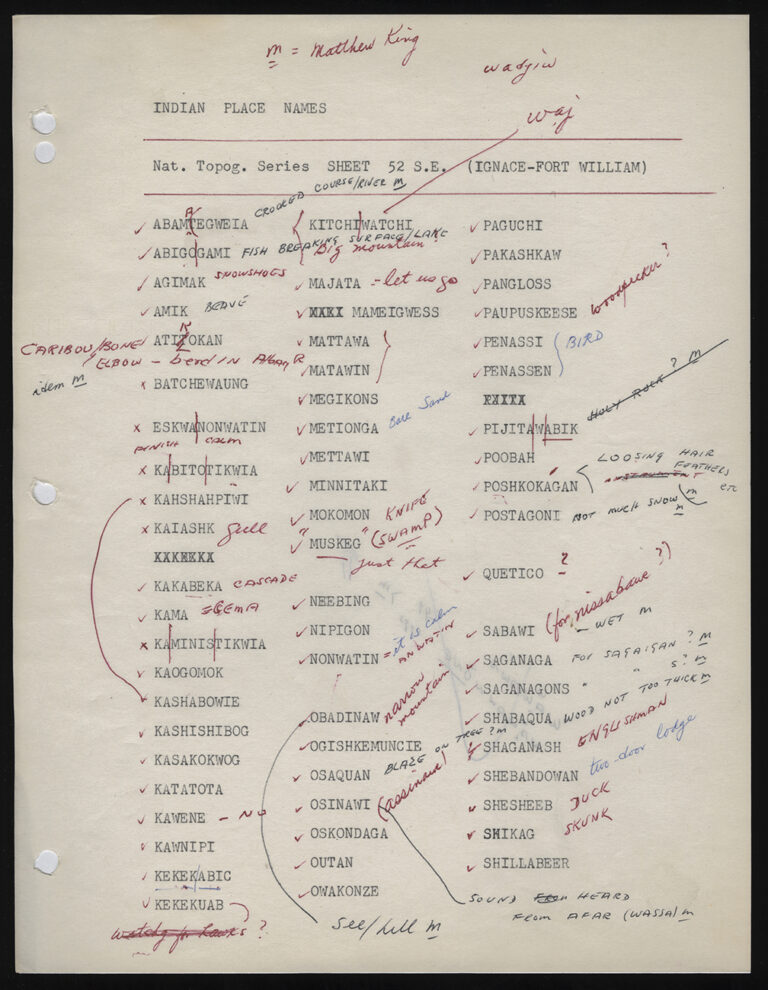
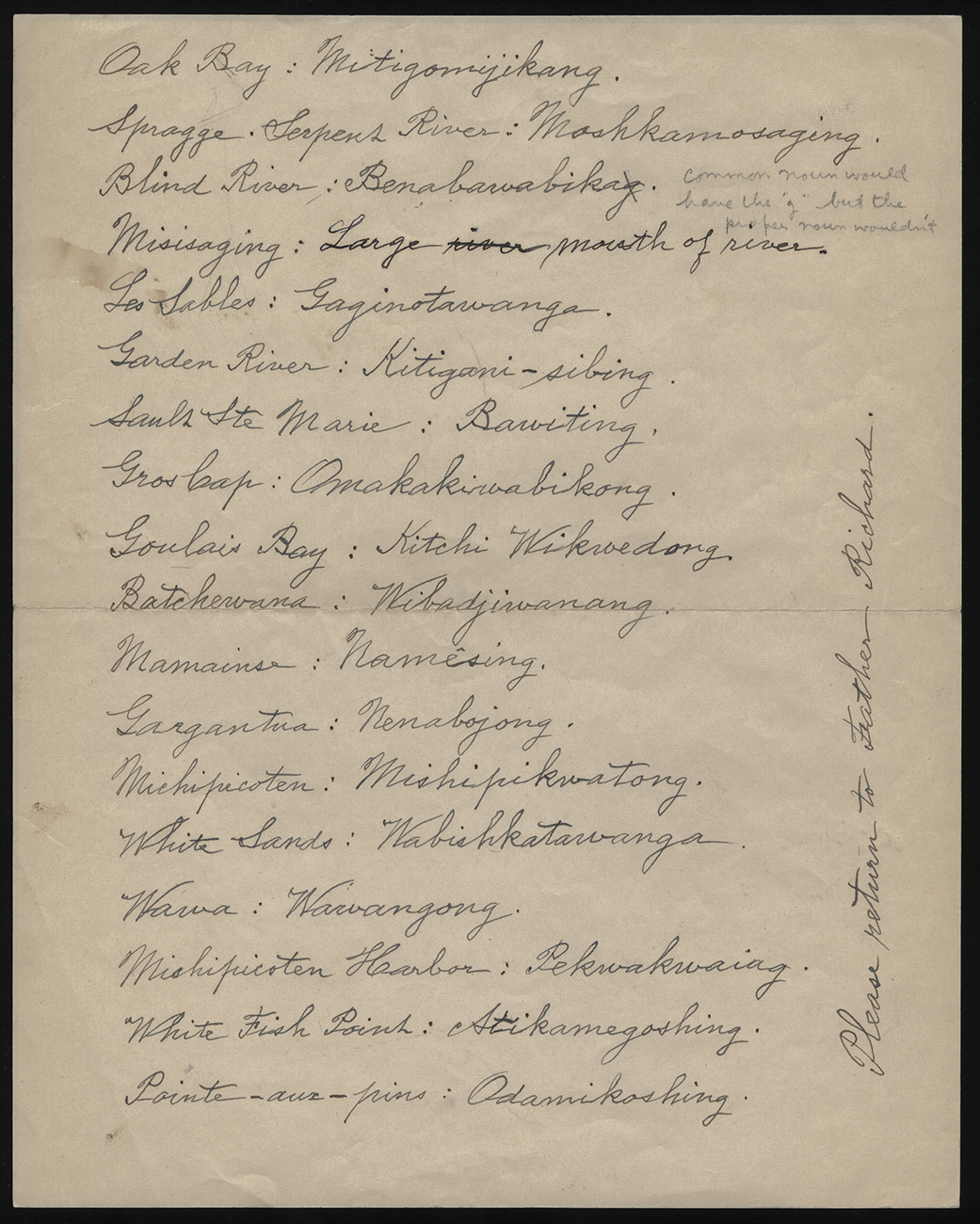
Much of the research produced by the Jesuits in this collection concerns place names in Ontario. Of primary interest was the Indigenous origins of contemporary places, as well as the traditional terms used by Indigenous peoples before new names were imposed by Europeans. For instance, Father Edward O’Flaherty, S.J., produced research on the Algonquian name for the community of Little Current on Manitoulin Island, Ontario. Referencing the well-known grammars of Jesuits Frederic Baraga, S.J., and Chrysostome Verwyst, S.J., he argues that the Indigenous name for Little Current is “Waiebidjiwang”. Other research notes in the collection show that the Jesuits used many methods to trace etymological roots, such as consulting Indigenous communities, reading newspaper articles, and conducting archival research.
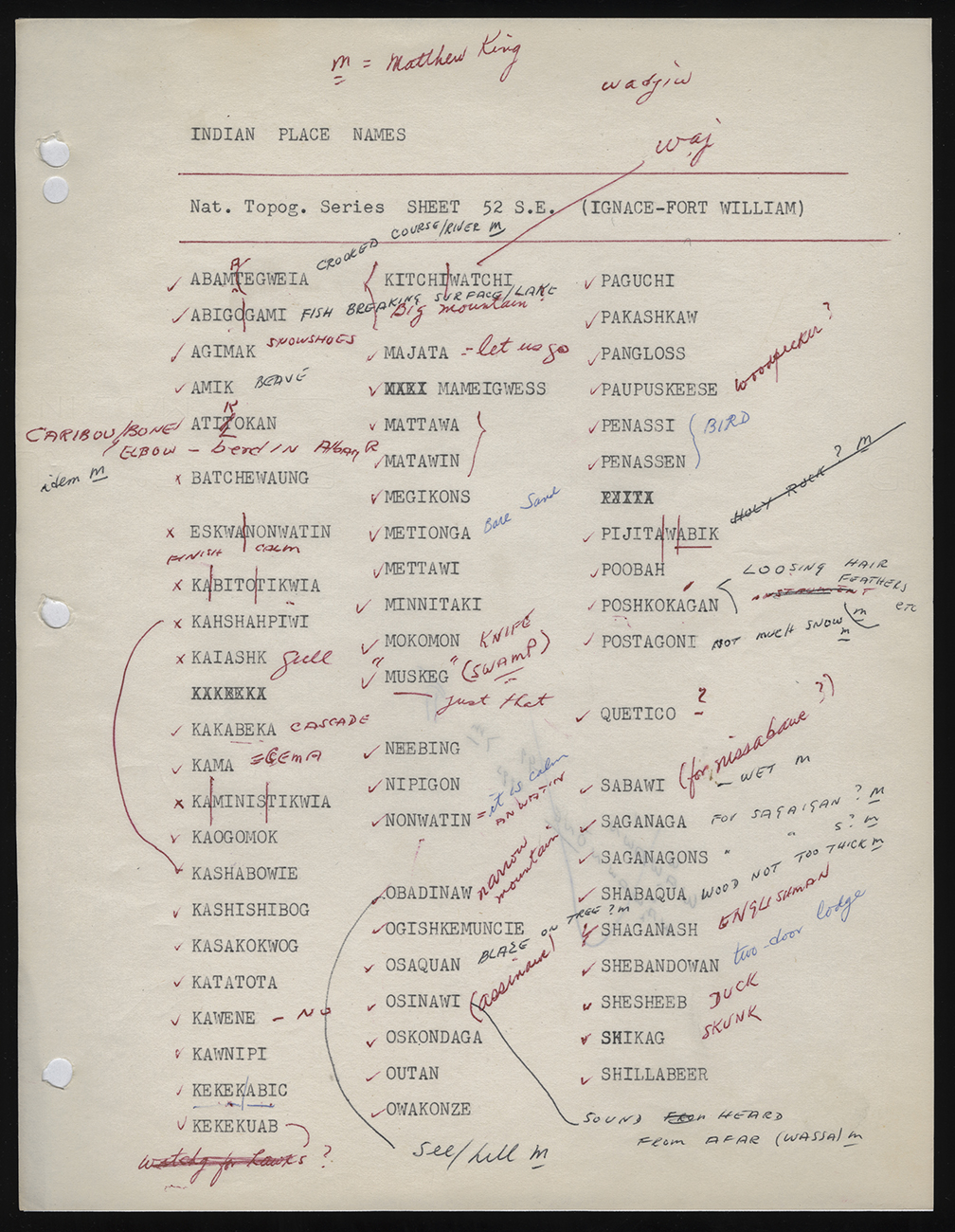
For example, Father F.J. Costello, S.J., corresponded with the Government of Ontario’s Department of Mines and Technical Surveys about the province’s Anishinaabemowin place names.
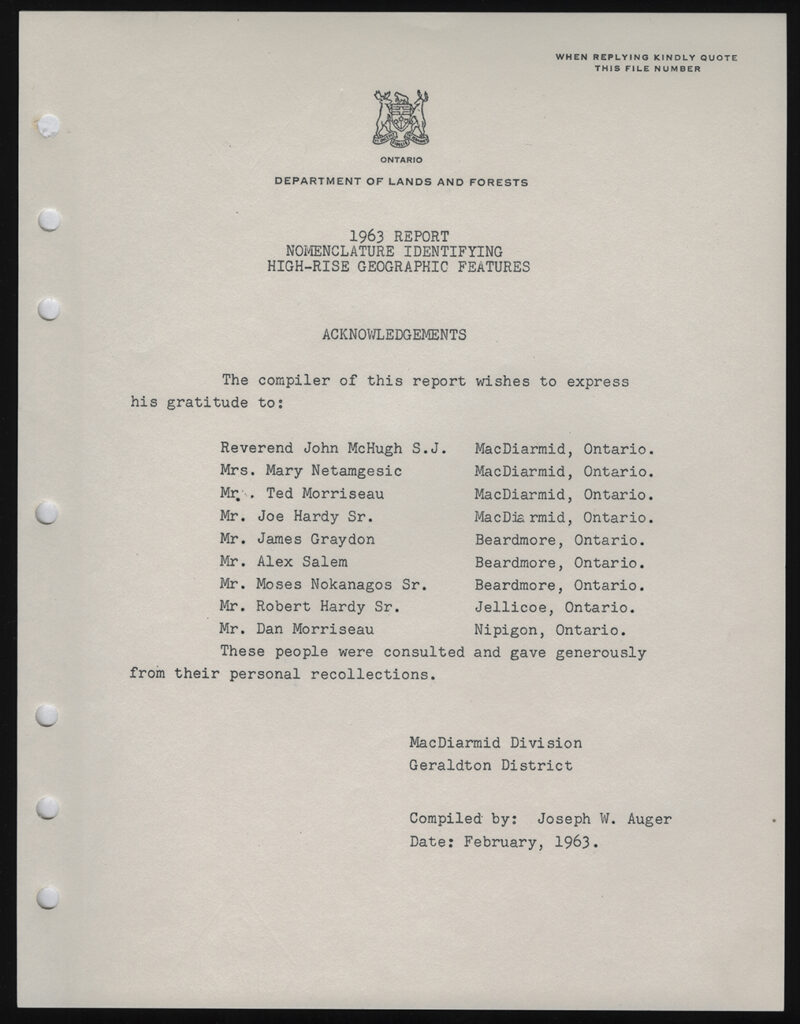
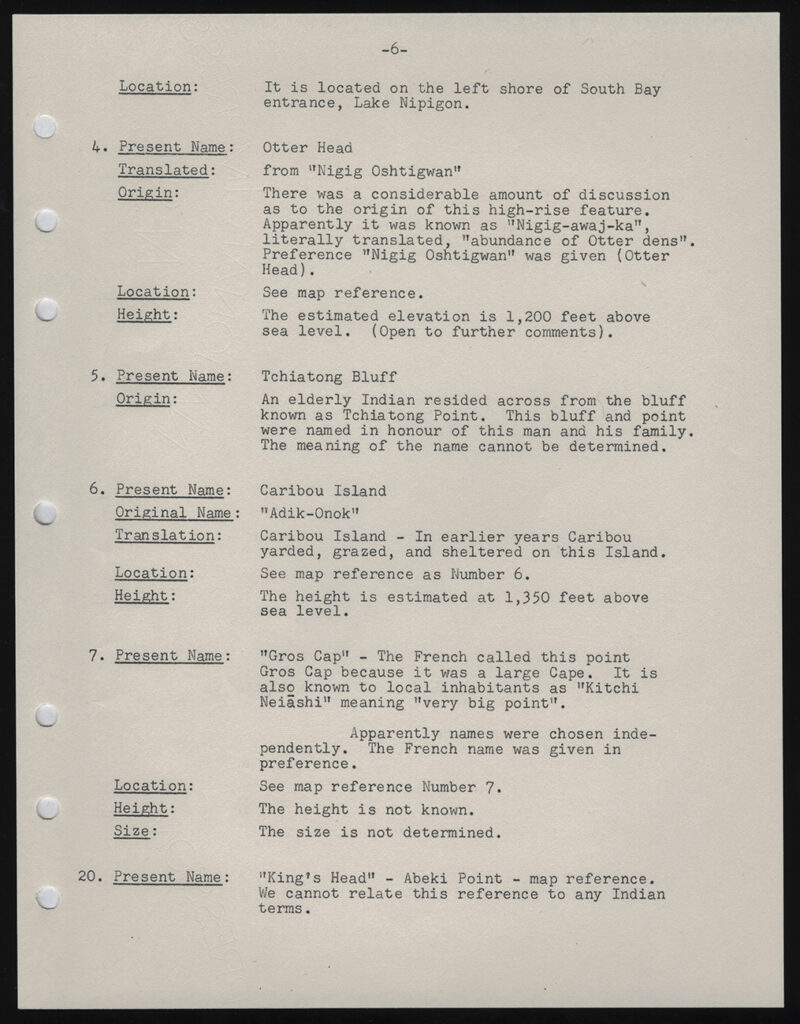
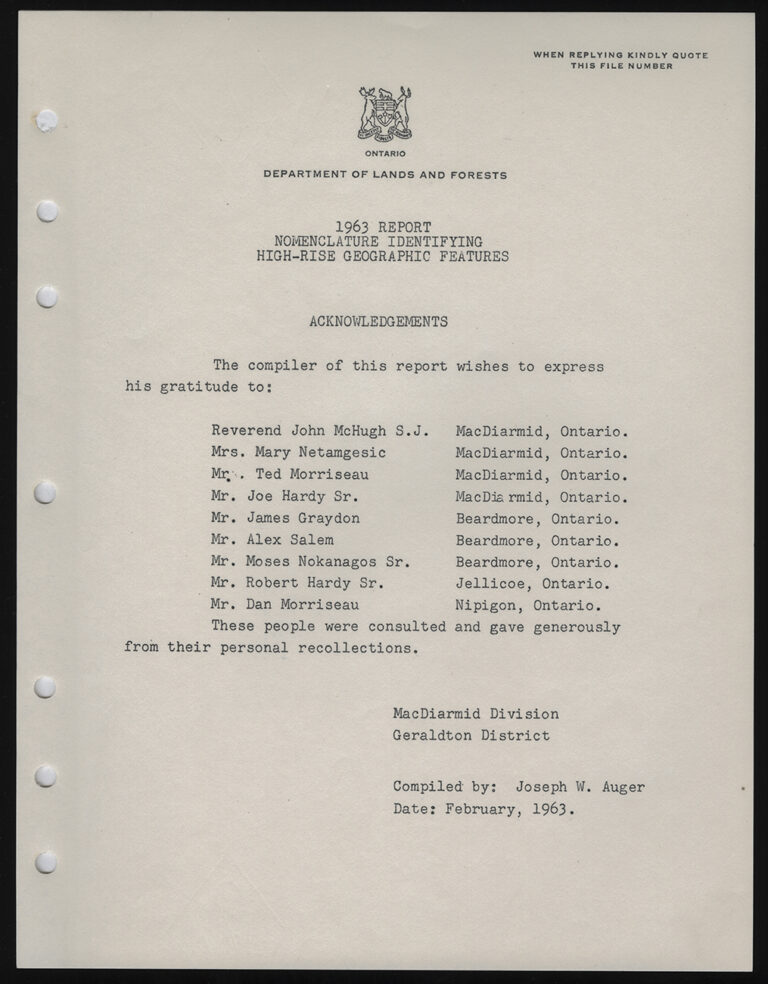
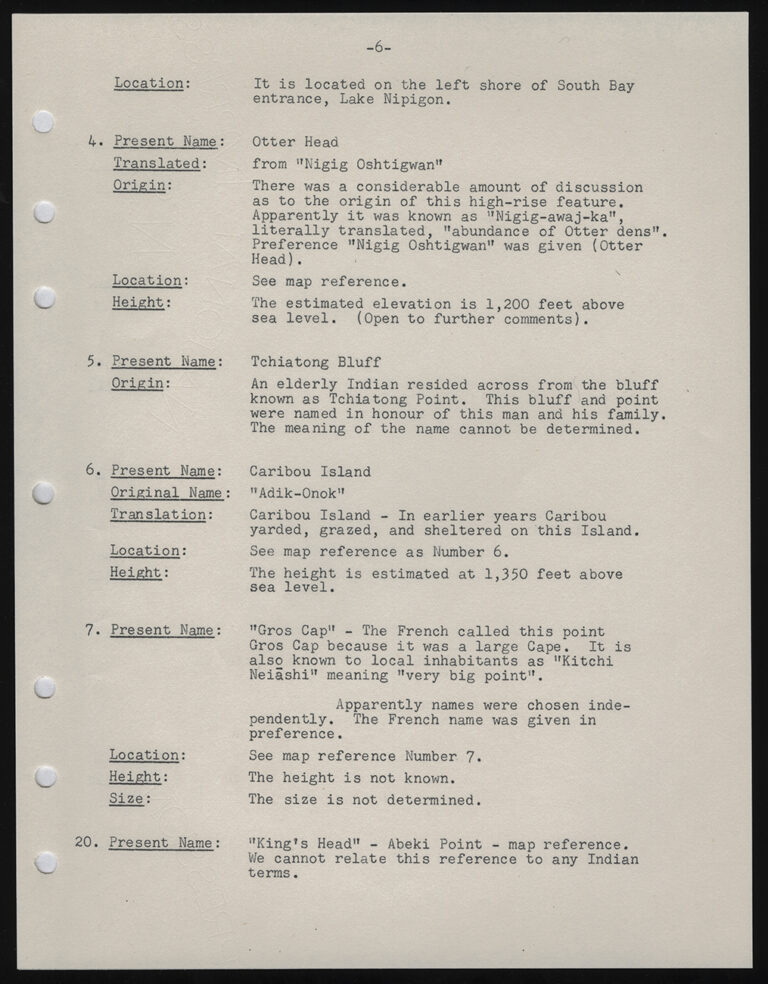
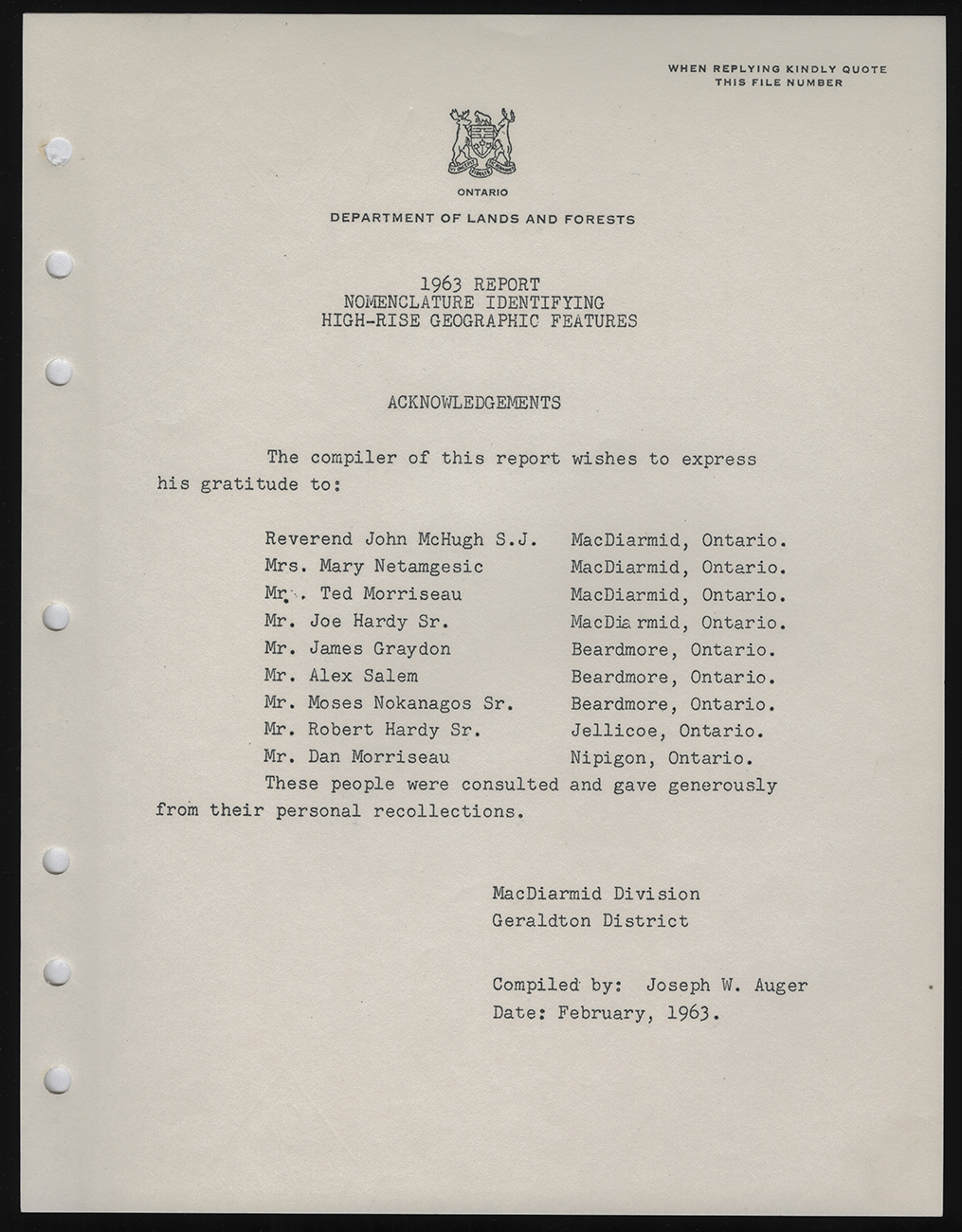
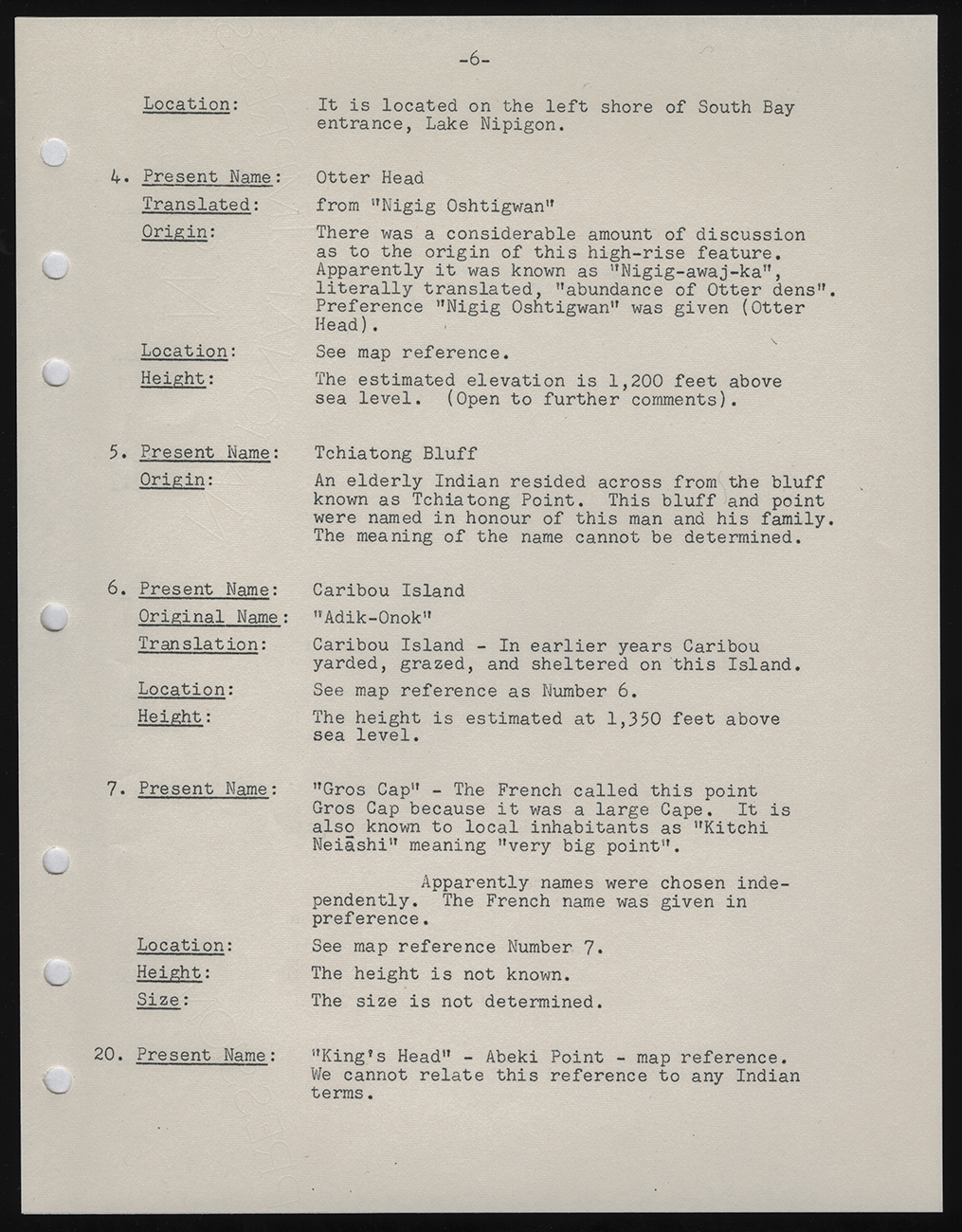
There are also instances of Jesuit involvement in government etymological research. A 1963 Ontario Department of Lands and Forests report identifying the Indigenous names of high-rise geographical features in the province acknowledges Father John McHugh’s contribution to the report as a consultant. The document provides detailed information on the Anishinaabemowin names of mountains and other high-rise features in Ontario, such as Otter Head, which is noted to have derived from “Nigig Oshtigwan.”
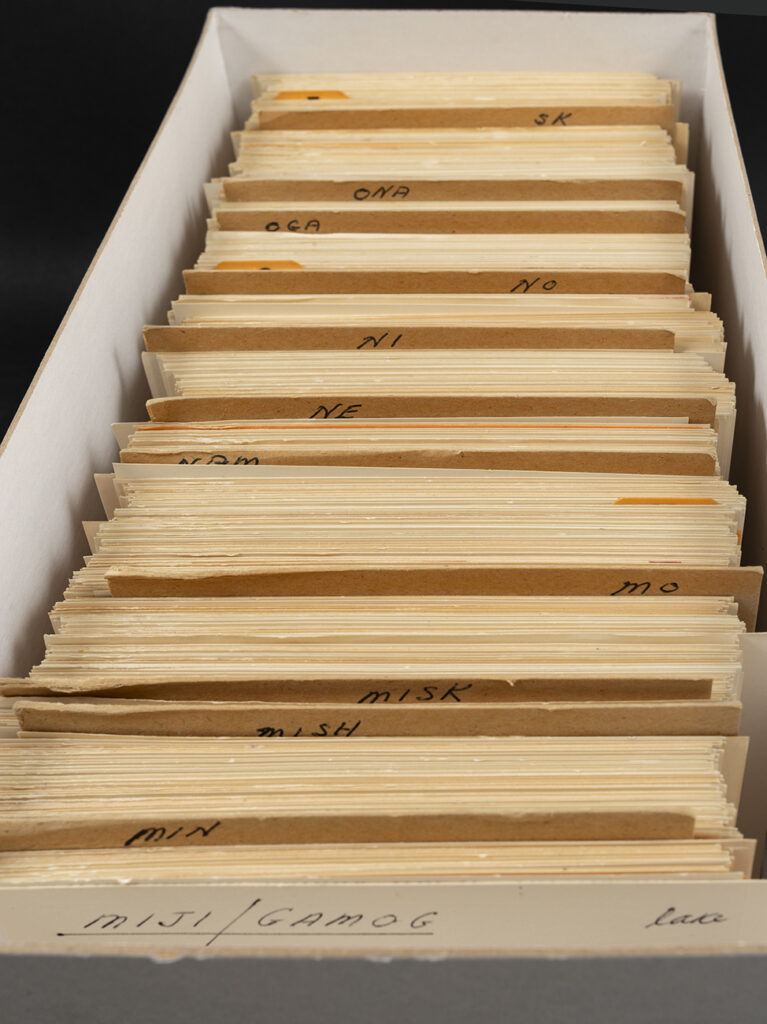
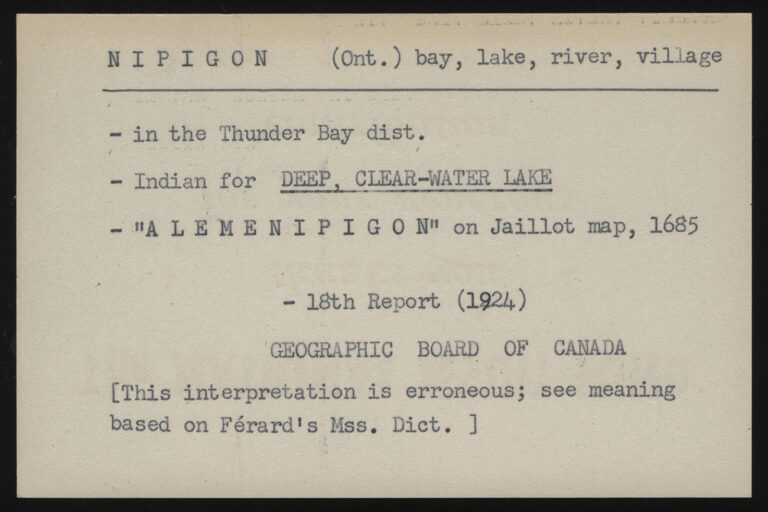
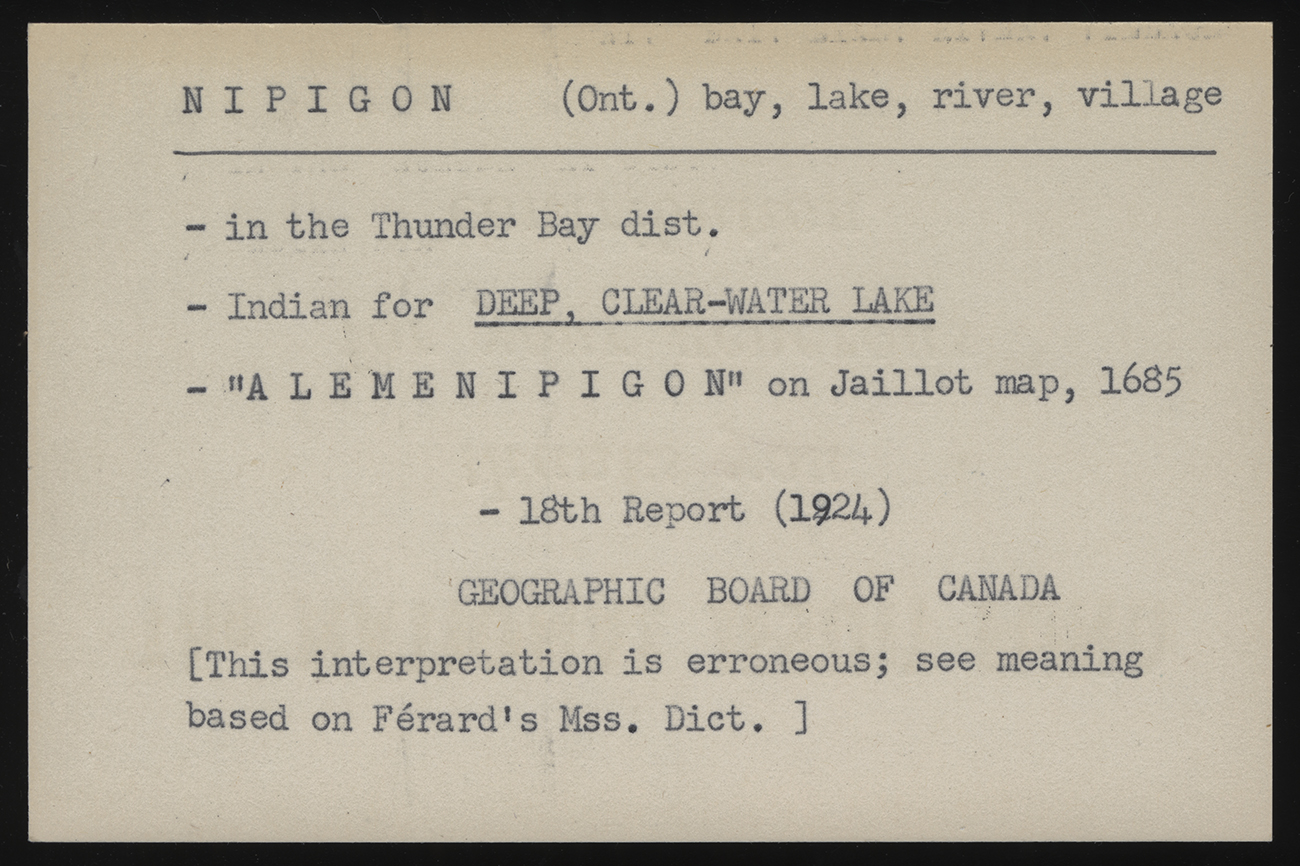
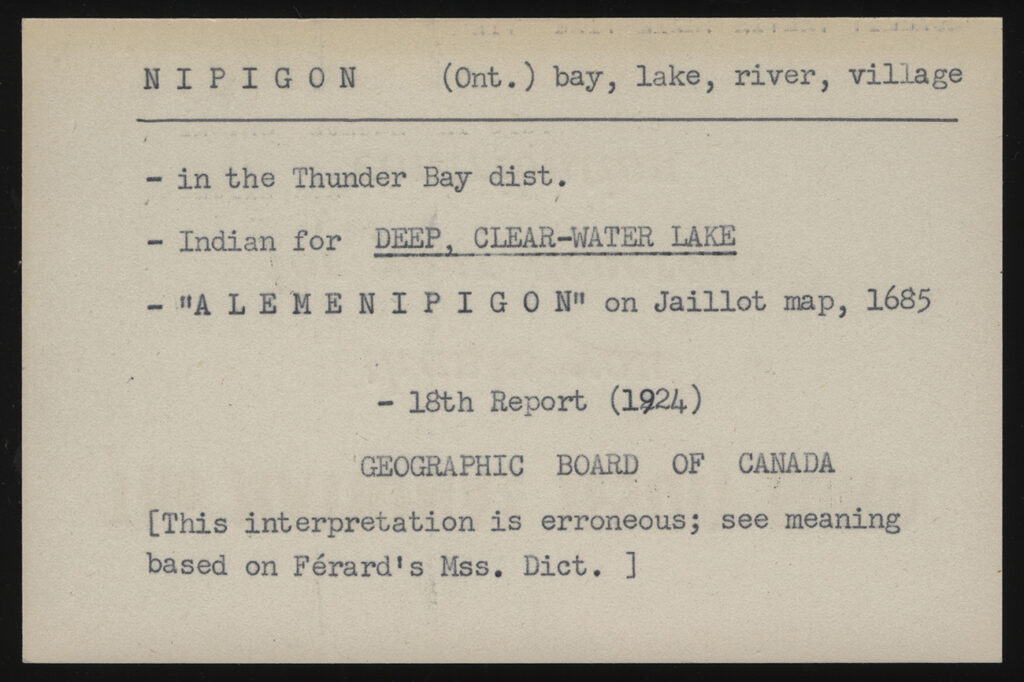
The Jesuits created an extensive indexing system to contextualize place names, personal names, and other words. The index cards, which are part of the collection, often point to textual sources written by Jesuits, as well as other language resources. The languages of both the words and references on each card range widely, from English and French to Anishinaabemowin, Cree, and other Indigenous languages.
Index cards, 2016-0015.S4.2.6.4.7_05
Jesuit curiosity in etymology appears across diverse materials in the collection and is, at times, quite subtle. On the back of a 1959 Holy Cross Church letter to parishioners, for example, is jotted a note: “Ask Josette…if her father William was called Passakobikwan. What did it mean?” We find an apparent response at the bottom of the page—“Bissakobikwan… sticky back from the fact that he was once carrying some maple sugar on his back and it spilt over him”.
To consult the Indigenous Languages Collection, please visit our catalogue: [link].