by Brenna Roblin
During the recent processing of the Indigenous Language Collection (2015-0015), we came across several texts containing stamps from the libraries of the former school in Wiikwemkoong Unceded Territory and the Spanish Residential School, in Spanish, Ontario. The following examples offer a glimpse at the collection’s materials and its connection to these schools.
The Wiikwemkoong Industrial School was founded by the Jesuits in 1878 and would operate on Manitoulin Island until 1913. In 1894, the Industrial School was integrated into the educational system managed by the Department of Indian Affairs. The school would be succeeded by St. Peter Claver School (1913-1946) and Garnier College (1946-1958), commonly referred to as the Spanish Residential Schools.
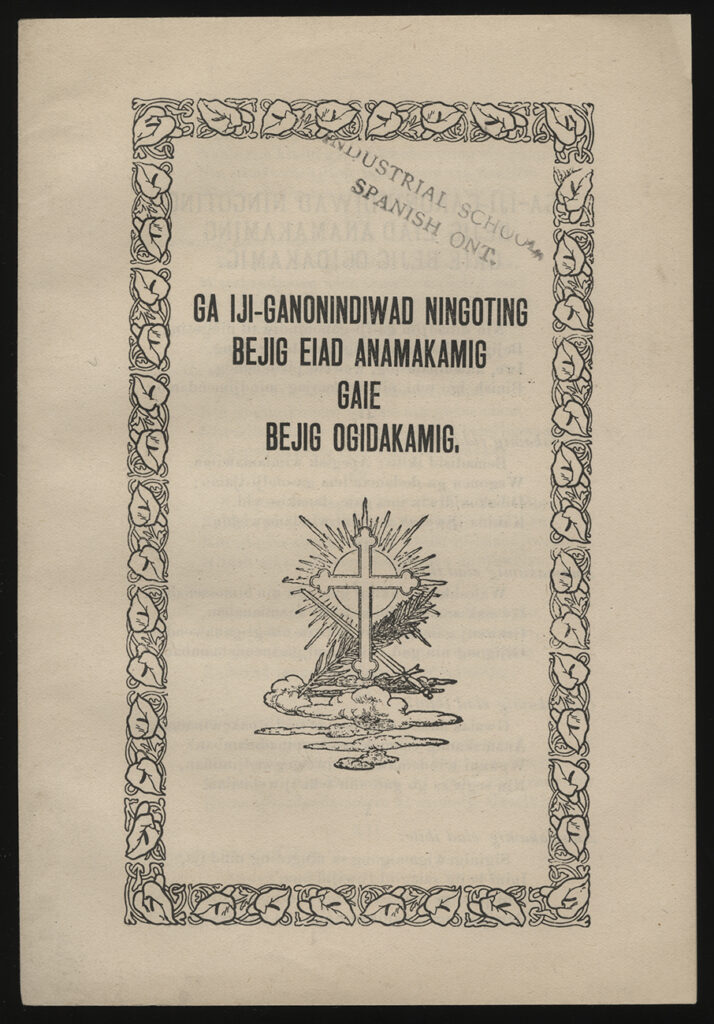
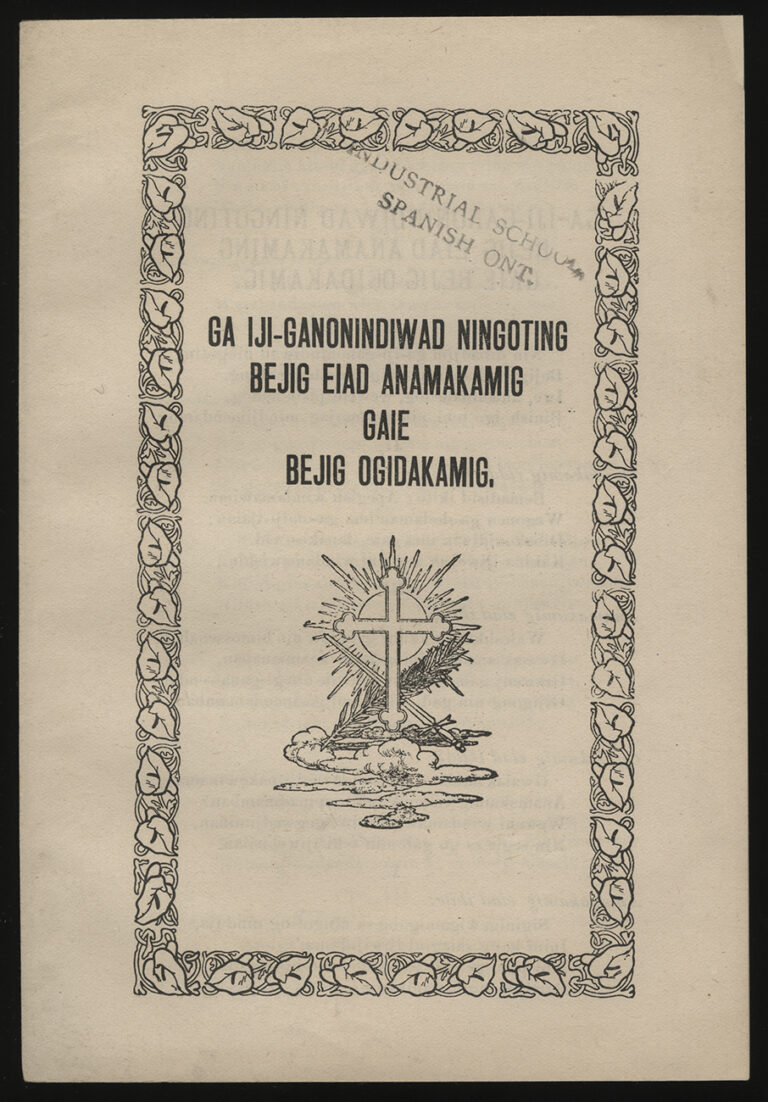
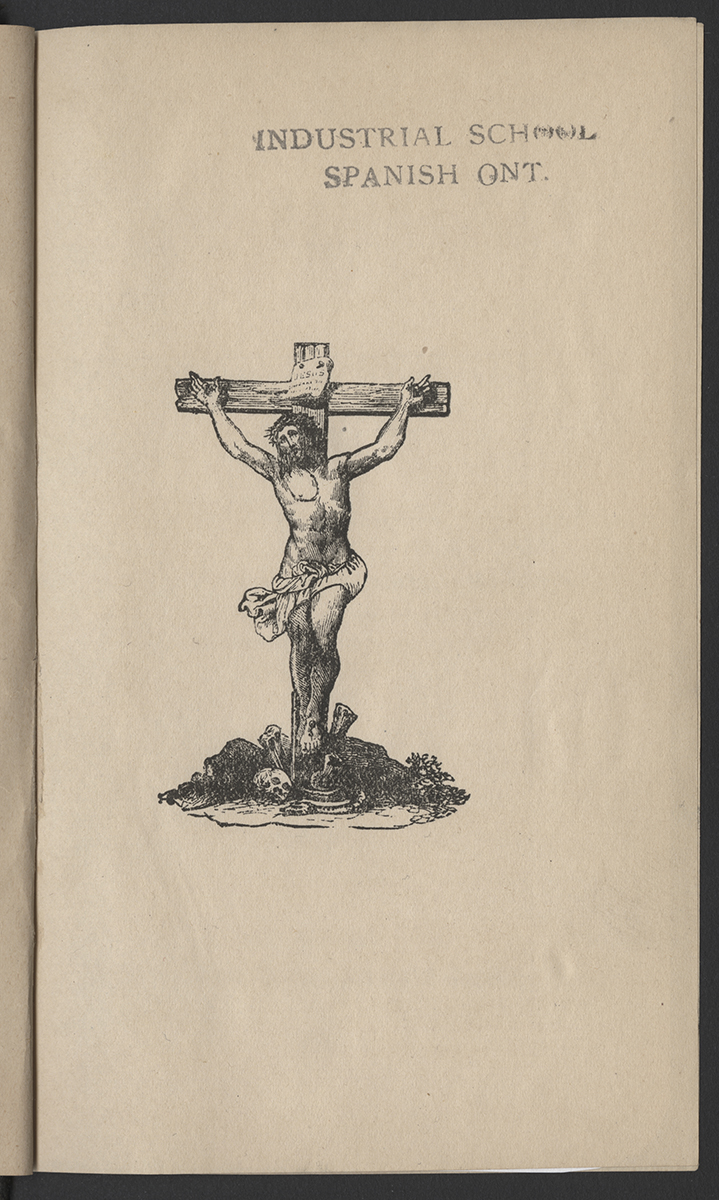
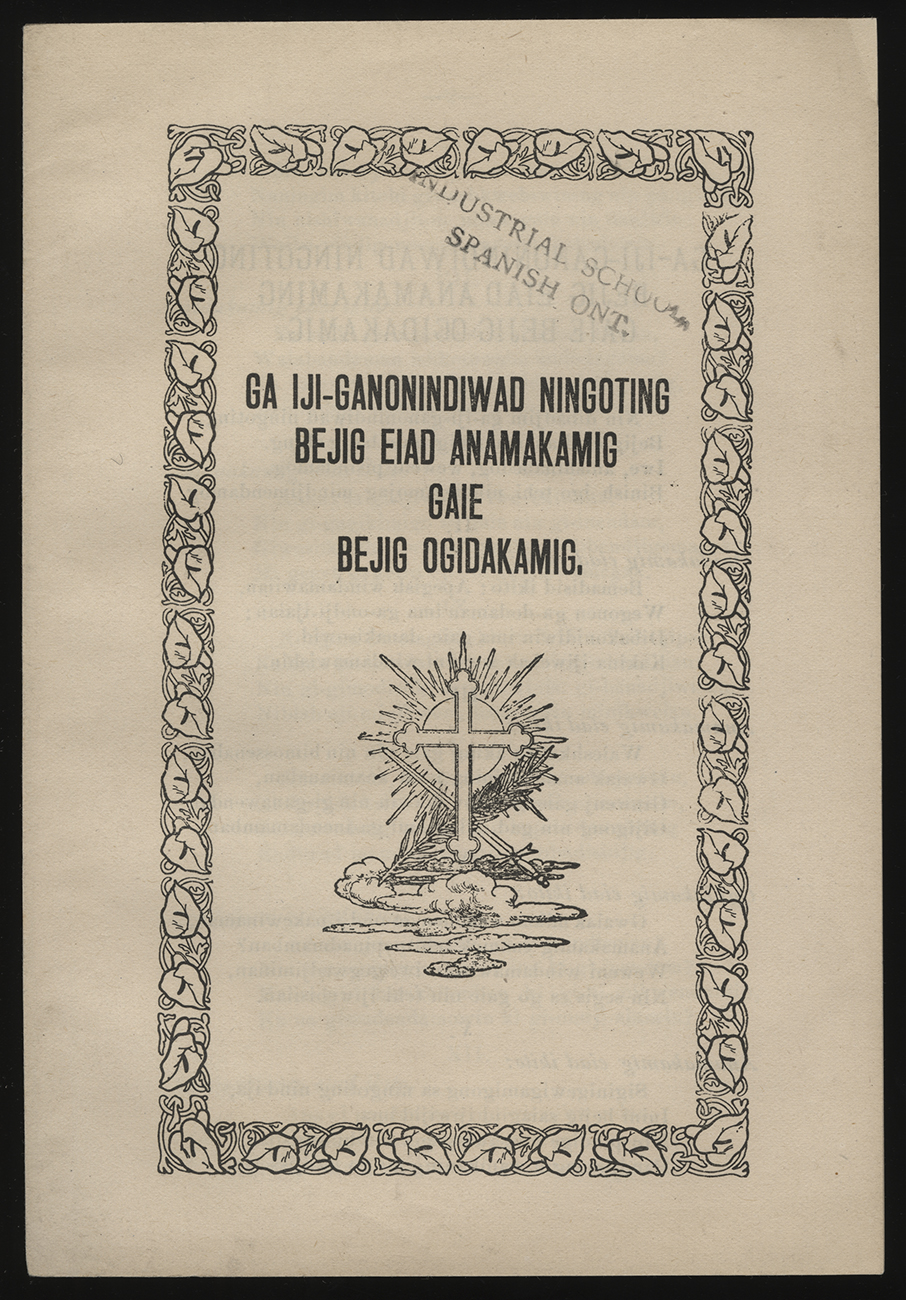
Many of the records in the Indigenous Language Collection are religious in nature, from hymns to books of prayers. Interestingly, several Anishinaabemowin hymnal booklets from the collection were printed locally in Wiikwemkoong Unceded Territory and stamped by the Industrial School library. Considering the original number of copies in the collection, these booklets may have been dispersed widely throughout the school community.
Ga Iji-Ganonindiwad Ningoting Bejig Eiad Anama-
kamig Gaie Bejib Ogidakamig hymnals, [19-?].
2016-0015.S2.2.17.1_01
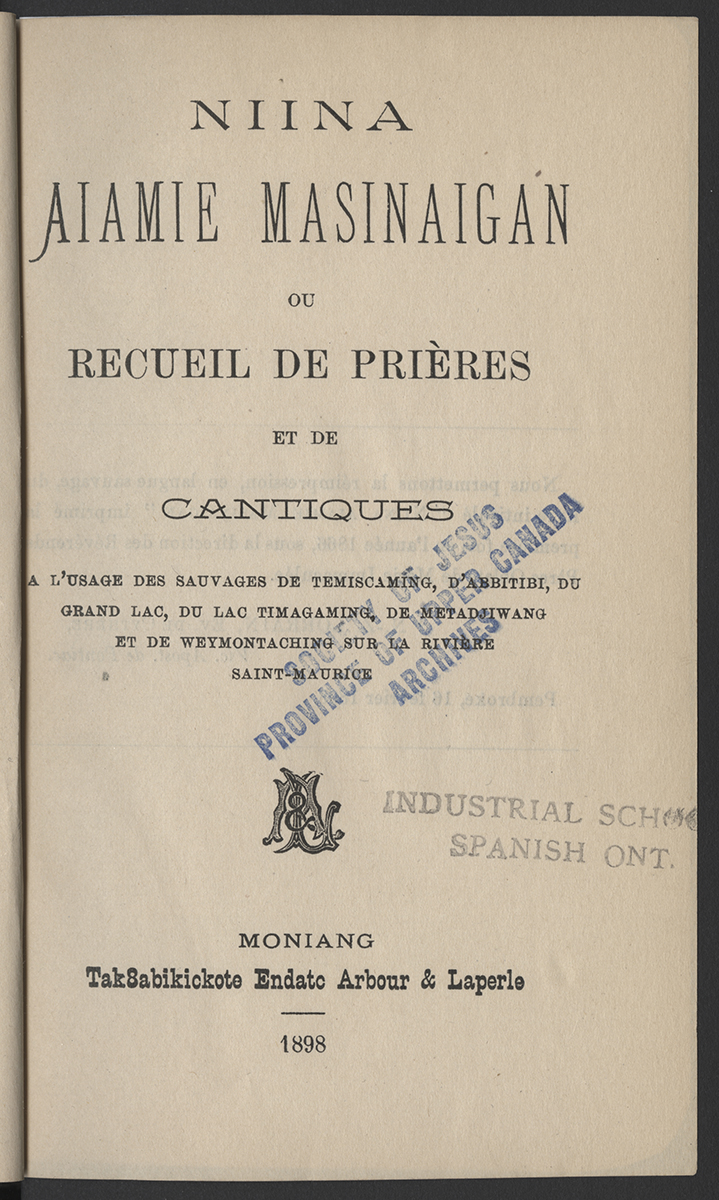
Niina Aiamie-Masinaigan (1898) is the second printing of a book of prayers and hymns that features an Anishinaabemowin-French title page. Authored by the Oblates and first published in Montreal in 1866, this text testifies to the francophone presence among Anishinaabemowin-speaking communities in Northern Ontario.
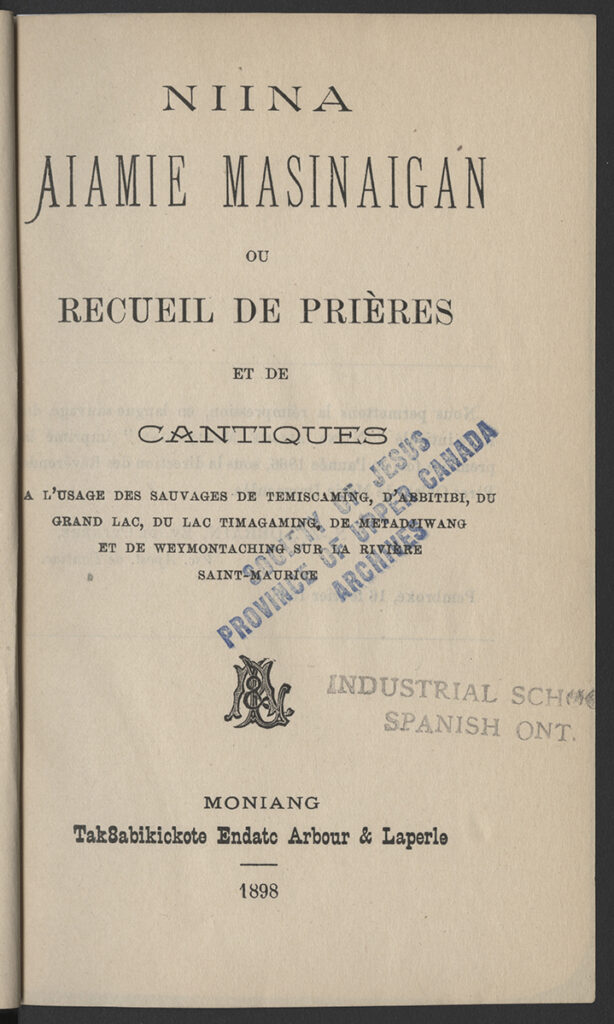
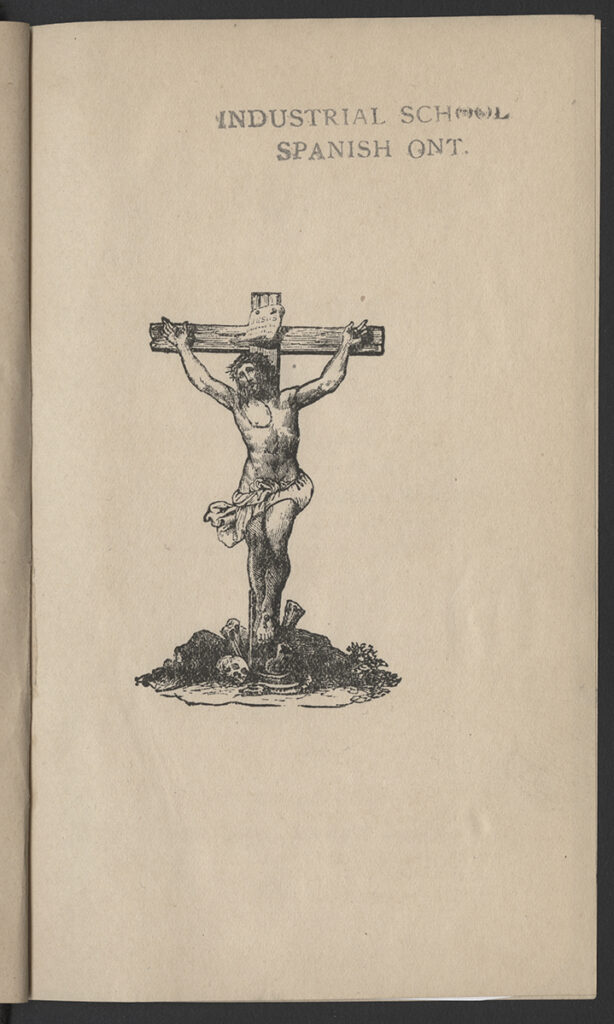
Until 1924, Spanish was under the administration of the Jesuit Province of Canada with headquarters in Montreal. During this period, most of the Jesuits posted at the school were francophones, many of whom learned to speak Anishinaabemowin and other Indigenous languages. The demographics of Jesuits who formed part of the Northern Ontario Missions would gradually shift in the twentieth century, becoming predominantly anglophone.
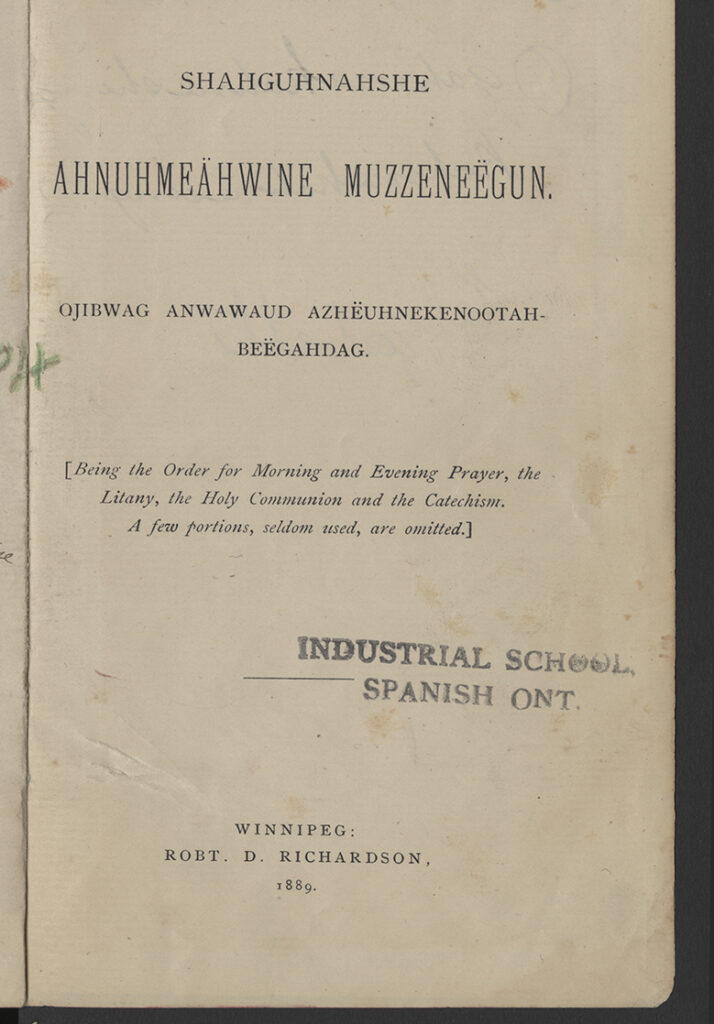
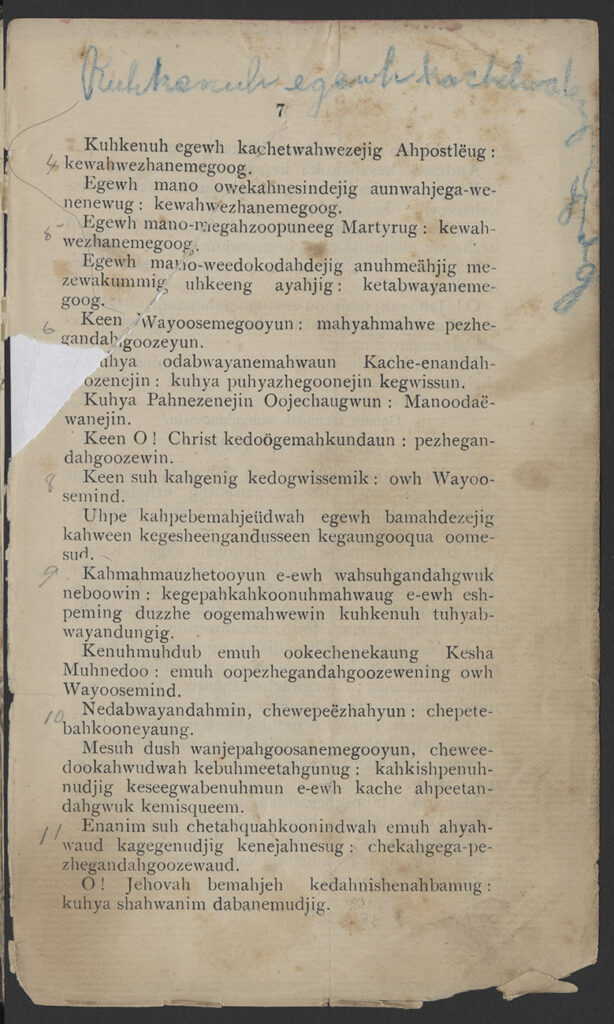
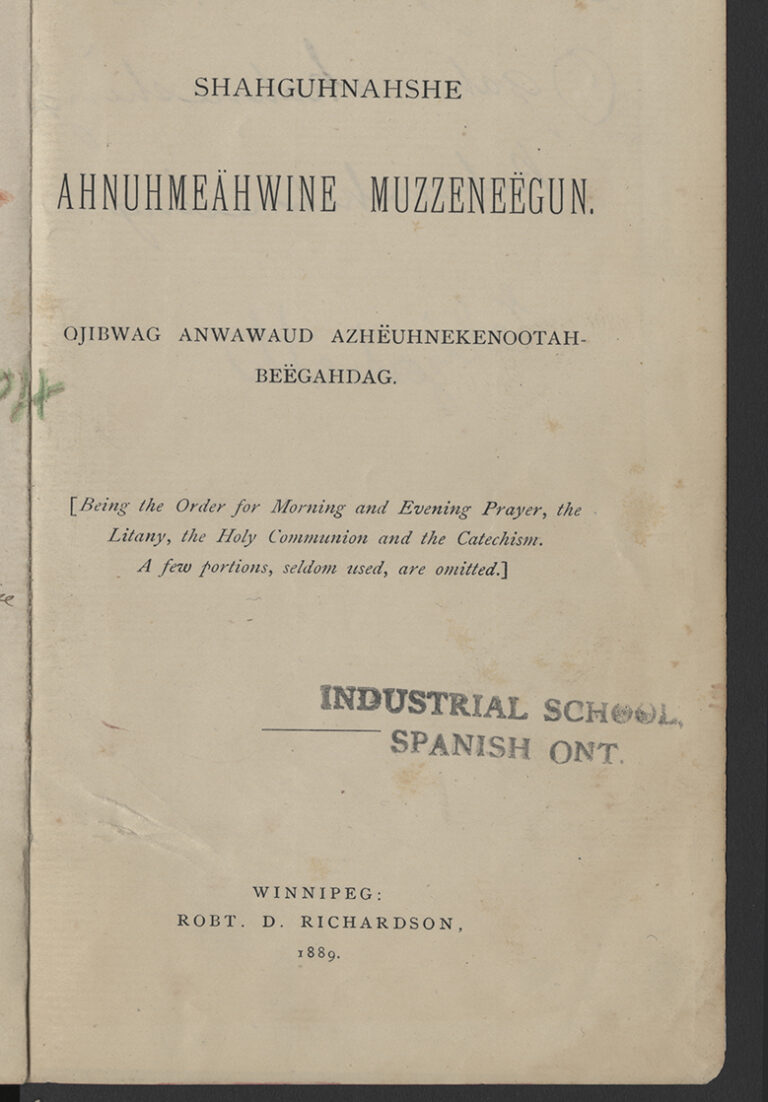
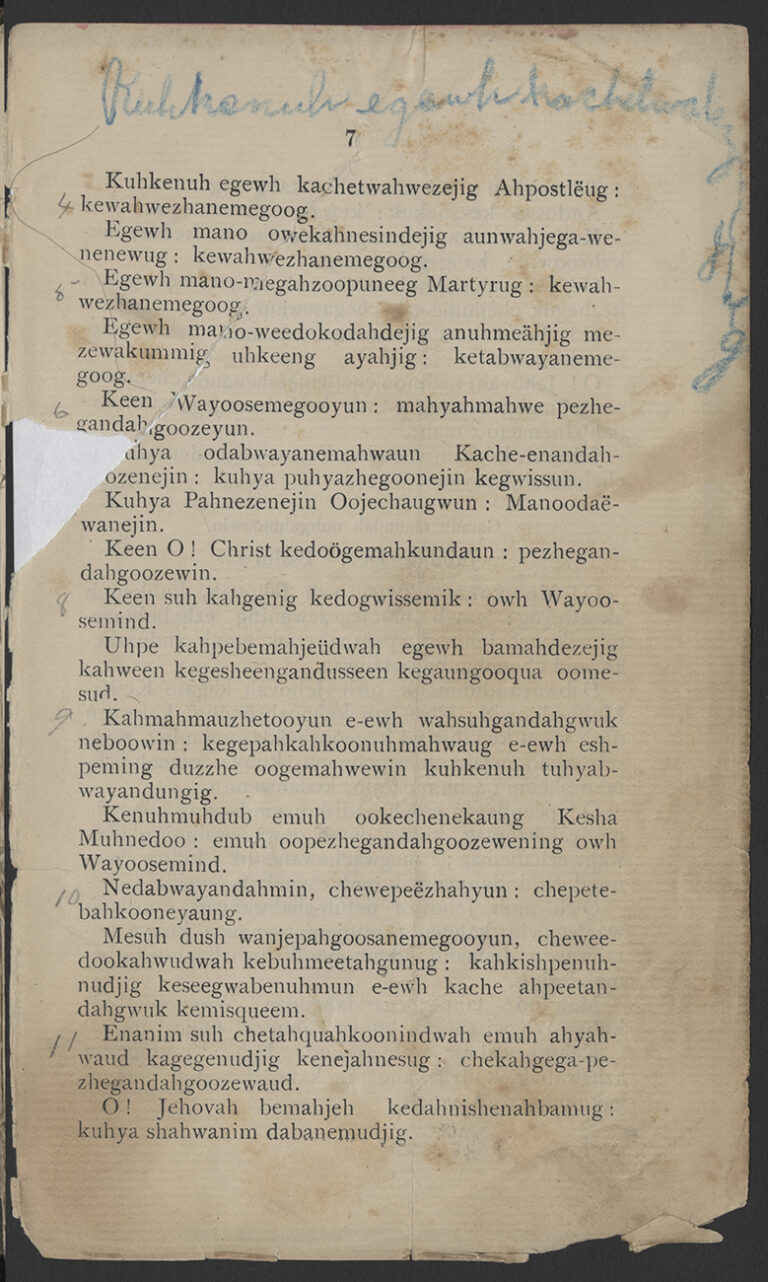
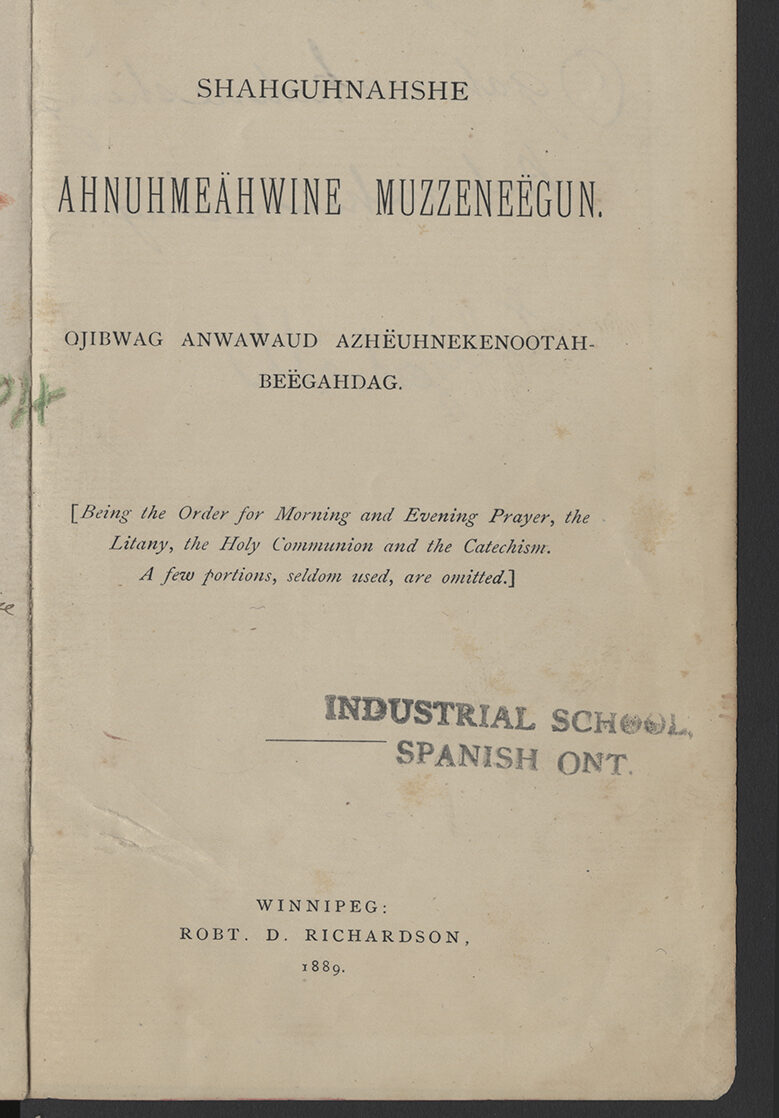
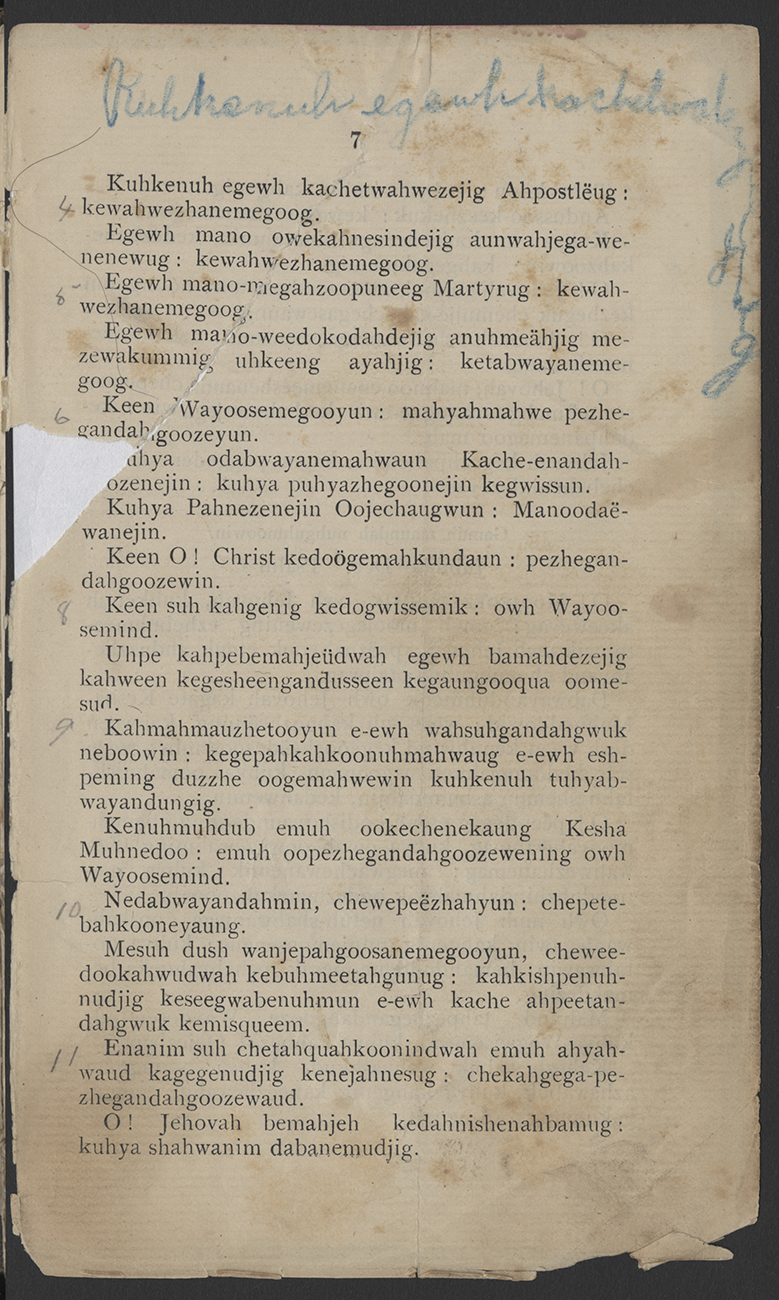
In an Anishinaabemowin prayer book, entitled Shahguhnahshe Ahnuhmeähwine Muzzeneëgun (1889), traces of students can be seen in the margins. With pencil and crayon, children appear to have inscribed their own names, birthdays, and other personal details. Many of the students who attended the Spanish Residential Schools came from local reserves, while some were from as far away as the communities of Ahkwesáhsne, Kahnawà:ke, and Kanehsatà:ke.
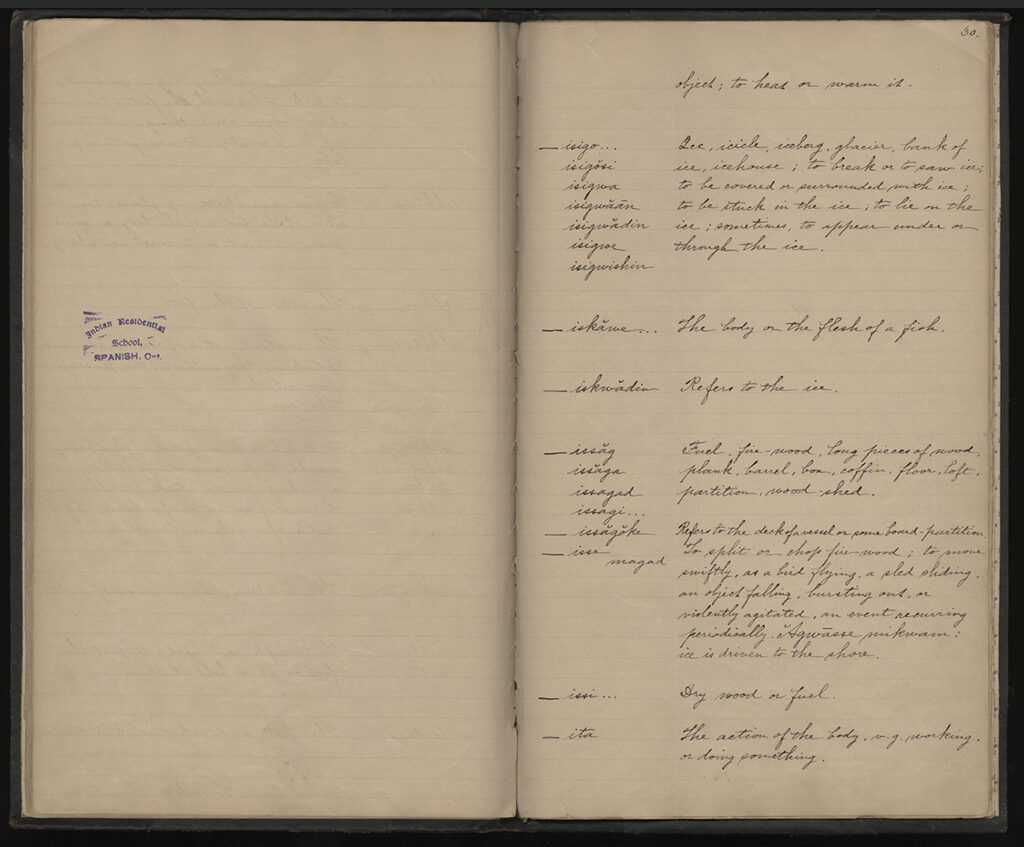
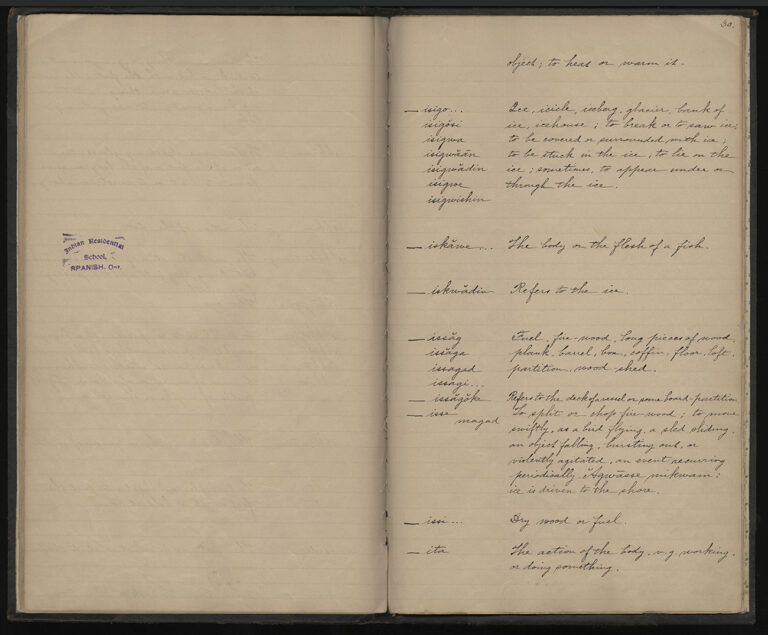
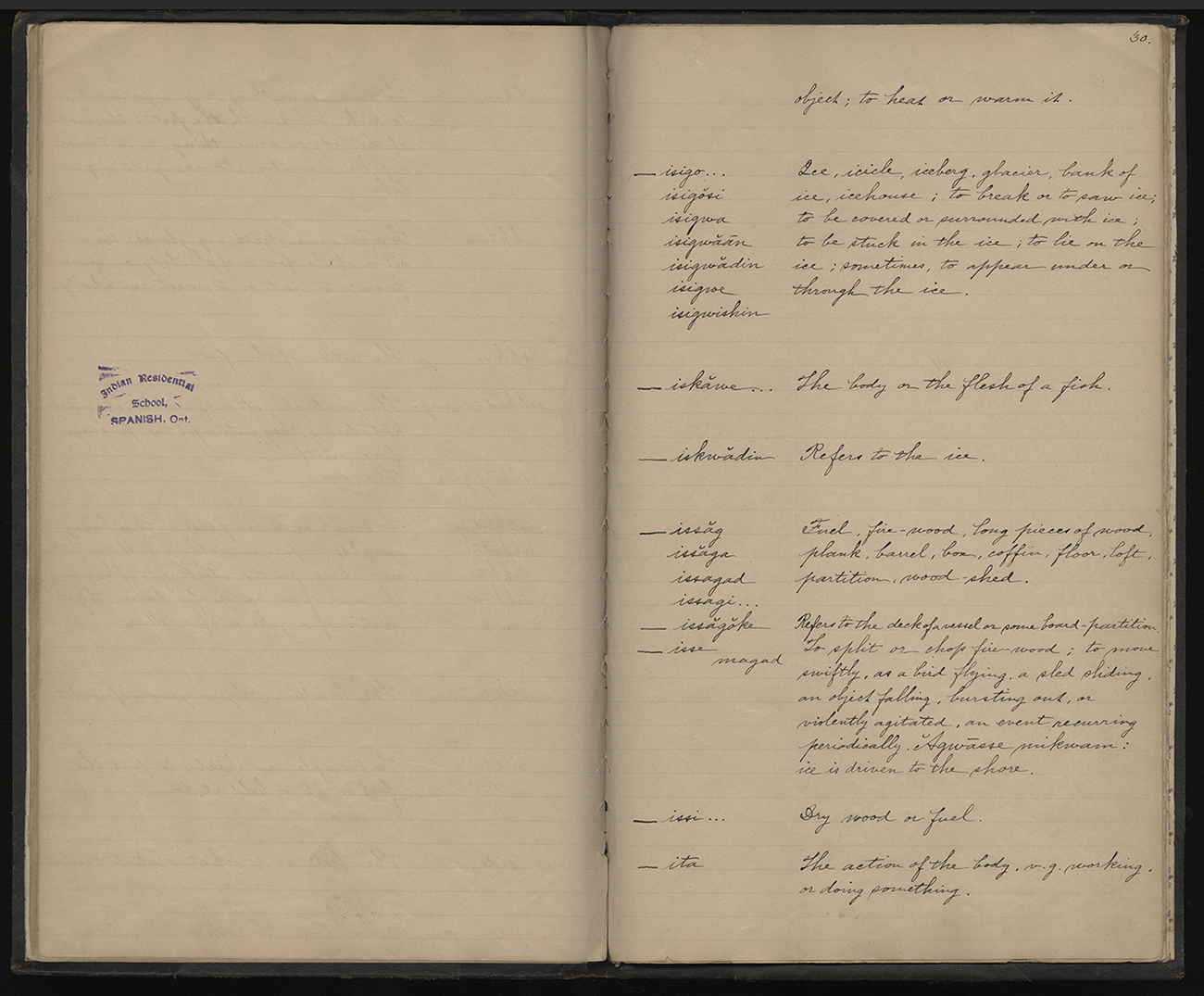
Language learning resources, like the Anishinaabemowin dictionary by Father Martin Férard, S.J., form a significant part of the collection. Férard dedicated many years to composing the Dictionnaire Français-Ojibwe, completing it shortly before his death in 1891.
Manuscript of the dictionary by Martin Férard, S.J., with defin-
itions in English, [18-]. 2016-0015.S1.2.3.2_45-46
A bound manuscript of this text (pictured above) containing Spanish Residential School stamps is found in the collection alongside Férard’s notes and several transcriptions.
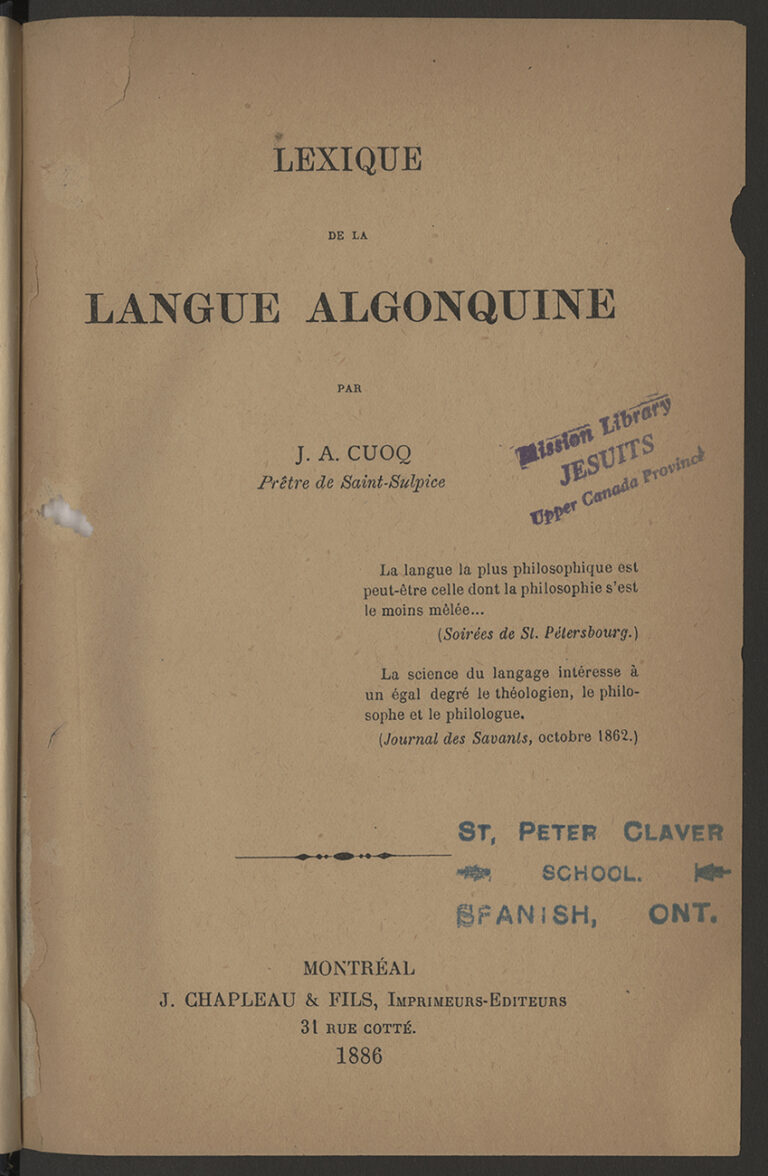
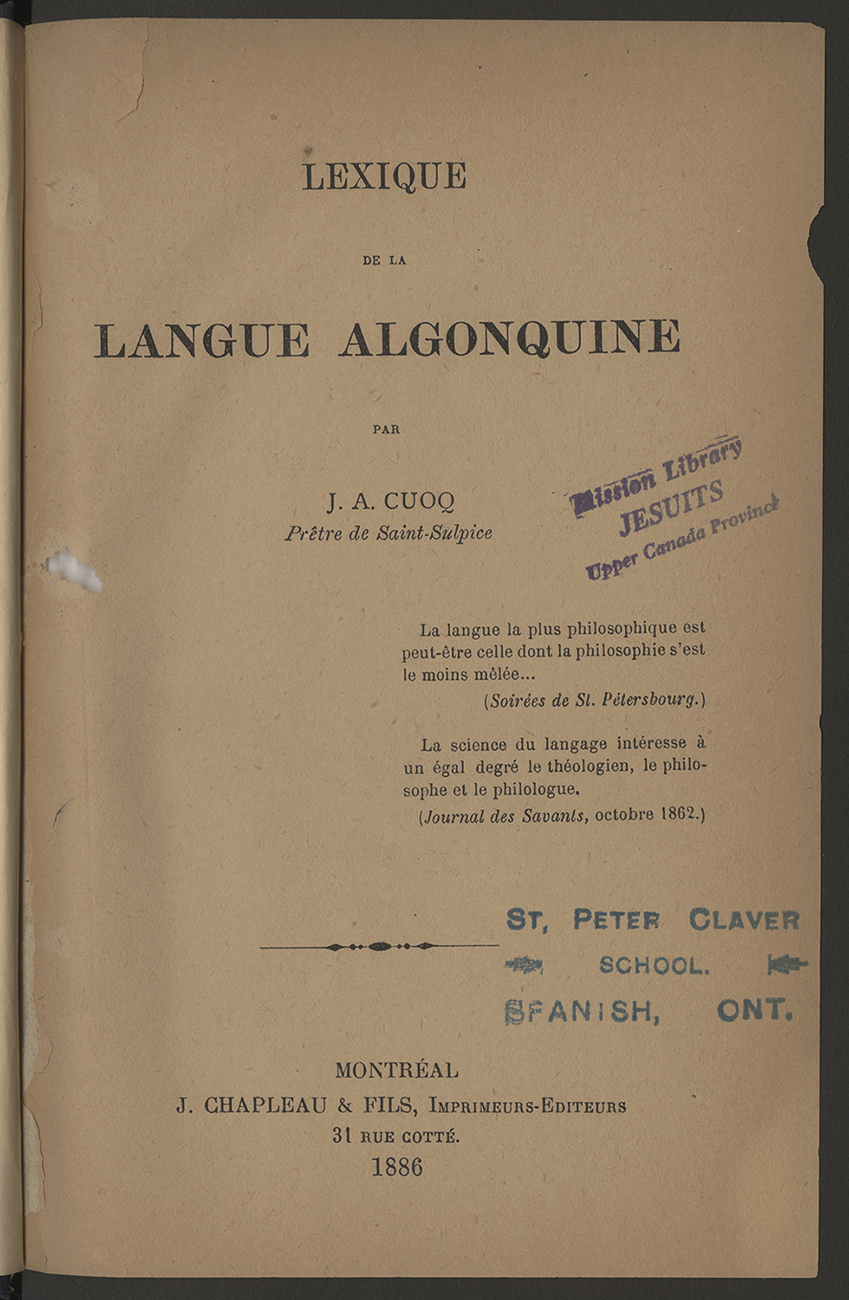
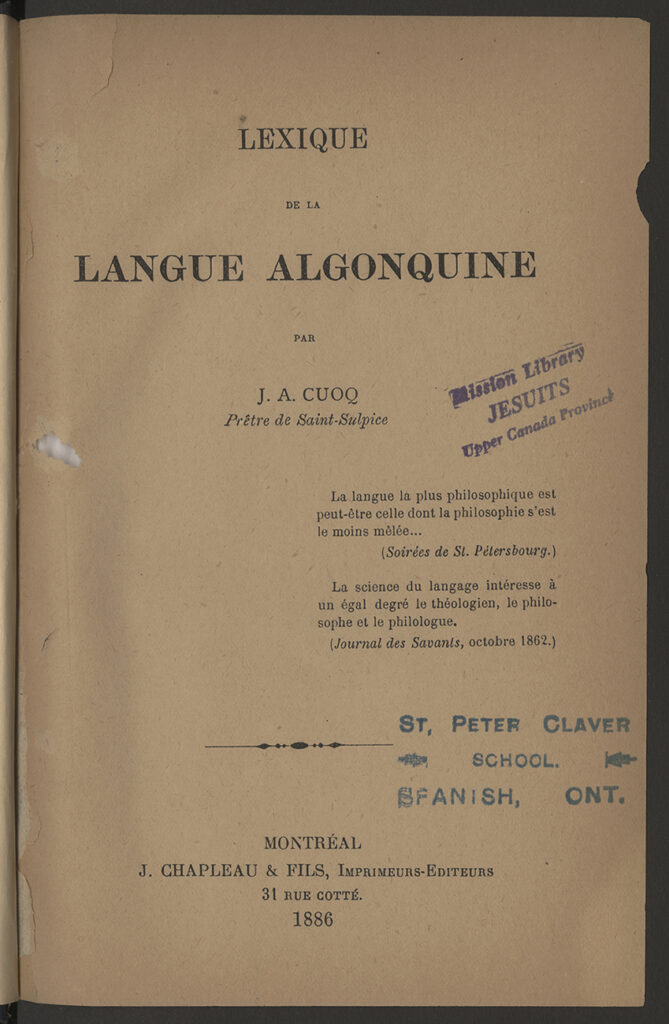
Finally, a stamped copy of Lexique de la langue algonquienne can be found in the collection. Written by Sulpician priest J.A. Cuoq, this well-known lexicon of Algonquian languages was published in Montreal in 1886. In contrast to the previous examples, Lexique de la langue algonquienne bears a stamp from St. Peter Claver School, the residential school which opened in Spanish, Ontario in 1913.
To consult the Indigenous Languages Collection, please visit our catalogue: https://catalogue.archivesjesuites.ca/northern-ontario-indigenous-languages-collection
Sources:
Canadian Institute of Jesuit Studies (1991). Dictionary of Jesuit Biography: Ministry to English Canada 1842-1987.
Monet, J. (Dir.). (2015). Builders of a Nation: Jesuits in English Canada 1842-2013. (Vol. 2). Novalis Publishing Inc.
Shanahan, D. F. (2004). The Jesuit Residential School at Spanish: “More Than Mere Talent”. Canadian Institute of Jesuit Studies.